The Bauhaus movement is one of the most influential design philosophies of the twentieth century. Known for its emphasis on simplicity, functionality and modern materials, Bauhaus fundamentally reshaped architecture, furniture design and visual culture.
Although the school existed for only fourteen years, the ideas developed there continue to shape modern interiors and design thinking today. Understanding Bauhaus is also essential for understanding later movements such as mid-century modern design.
The Origins of Bauhaus
The Bauhaus school was founded in 1919 in Weimar, Germany by architect Walter Gropius.
Gropius envisioned a new type of design school that would unite artists, architects and craftsmen under a single philosophy. His goal was to break down the traditional separation between fine art and practical design.
The school’s name itself reflects this ambition. The word “Bauhaus” translates roughly to “building house,” symbolising the idea that all artistic disciplines should work together in the creation of modern architecture and design.
Rather than focusing on decoration or historical styles, Bauhaus encouraged experimentation with modern materials and industrial production methods.
The Core Philosophy of Bauhaus
At the heart of Bauhaus design lies a simple principle: form follows function.
This idea meant that objects should be designed primarily for their purpose rather than for decorative effect. Every line, surface and material choice should contribute to usability and efficiency.
Bauhaus designers believed that well-designed objects could improve everyday life. Furniture, buildings and everyday products should be both practical and aesthetically clear.
These ideas would later influence many aspects of modern design, including the development of mid-century interiors explored in our article on Bauhaus vs Mid-Century Modern design.
Materials and Design Language
Bauhaus designers embraced modern industrial materials that reflected the technological optimism of the early twentieth century.
Common materials included:
- tubular steel
- glass
- concrete
- plywood
- chrome
Furniture designer Marcel Breuer famously developed tubular steel furniture inspired by bicycle frames. These pieces combined lightweight construction with structural strength.
The visual language of Bauhaus design emphasised:
- geometric forms
- clean lines
- minimal decoration
- balanced proportions
The result was a style that felt radically modern compared with the ornate interiors of the nineteenth century.
Bauhaus Architecture
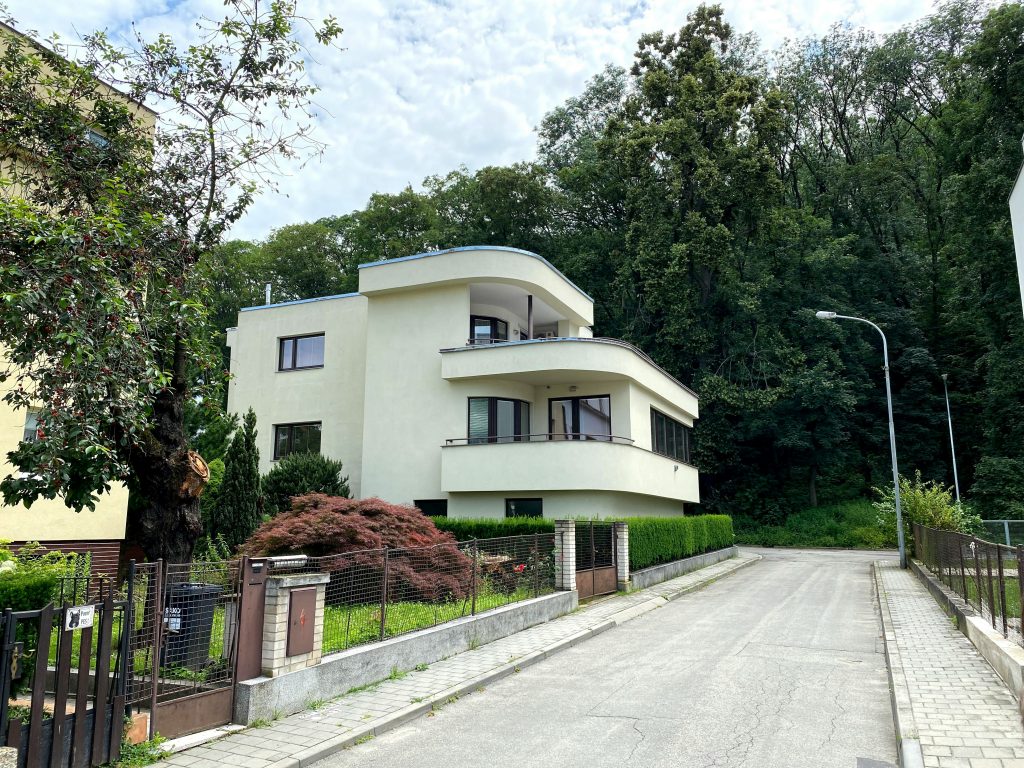
Architecture played a central role in Bauhaus thinking. Buildings designed according to Bauhaus principles often featured flat roofs, white facades and large windows.
These structures prioritised functionality, natural light and efficient layouts rather than decorative ornament.
Architects such as Ludwig Mies van der Rohe helped refine this architectural language, developing structures defined by clarity and structural expression.
Many modernist buildings around the world today still reflect these principles.
Why Bauhaus Closed
Despite its growing influence, the Bauhaus school faced increasing political pressure in Germany during the early 1930s. In 1933, the institution was forced to close by the Nazi government.
However, the closure of the school did not end its influence.
Many Bauhaus architects and designers emigrated to other countries, particularly the United States. There they continued teaching and practicing design, spreading Bauhaus ideas across architecture schools and design institutions.
These ideas would later help shape movements such as mid-century modern design, which adapted modernist principles for residential interiors.
The Legacy of Bauhaus
Today, Bauhaus is widely recognised as a foundation of modern design.
Its emphasis on functionality, simplicity and industrial production continues to influence:
- architecture
- furniture design
- graphic design
- product design
Many contemporary interiors still reflect Bauhaus ideas, even when combined with warmer materials and textures.
While Bauhaus interiors often used restrained colour schemes, mid-century interiors later introduced richer tones. These palettes are explored in our guide to Mid-Century Modern Colour Palettes.
For example, the clean lines and functional layouts of mid-century modern kitchens can be traced back to Bauhaus principles of clarity and efficiency.