
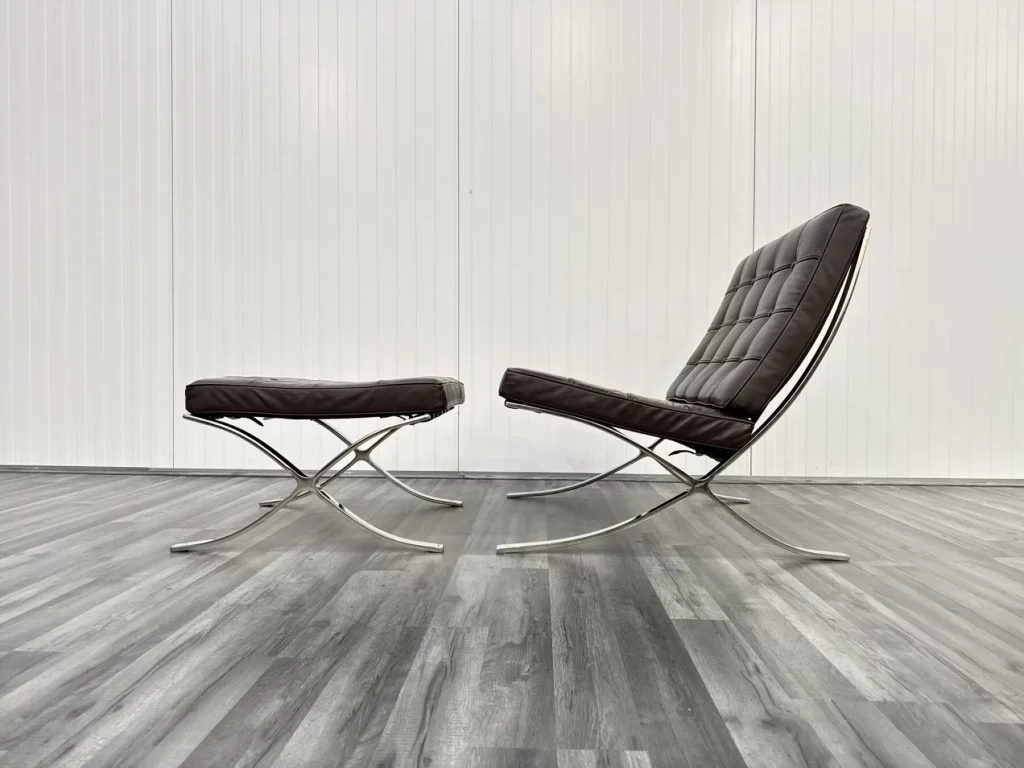
Few furniture pieces capture the essence of modernist design as powerfully as the Barcelona Chair. Designed in 1929 by Ludwig Mies van der Rohe in collaboration with Lilly Reich, this chair remains one of the most recognisable symbols of both Bauhaus thinking and mid-century modern interiors.
Originally created for the German Pavilion at the International Exposition of 1929, the chair was designed to seat Spanish royalty — and it still carries that same quiet sense of luxury today. The Barcelona Chair is a perfect example of the principles explained in What Defines Mid-Century Modern Design?
A Design Rooted in Simplicity
The Barcelona Chair reflects Mies van der Rohe’s philosophy: “less is more.” Every element is reduced to its essential form — clean lines, balanced proportions, and a sculptural silhouette.
Unlike traditional furniture of the time, it avoids ornamentation completely. Instead, beauty comes from structure, material, and precision.
Materials That Define the Piece
What makes the Barcelona Chair so enduring is its material honesty — a core principle also explored in Material Confidence in Mid-Century Modern Design.
- Hand-buffed stainless steel frame
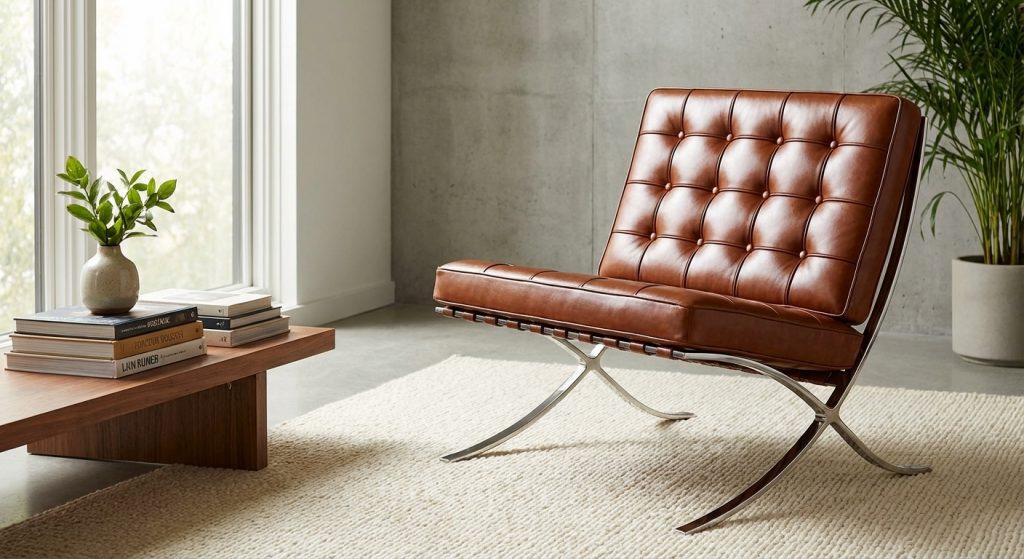
- Tufted leather upholstery
- Minimal yet highly engineered structure
This combination of industrial and luxurious materials creates a perfect balance between strength and comfort.

Bauhaus Influence vs Mid-Century Warmth
The Barcelona Chair sits at the intersection of Bauhaus and mid-century modern design.
While Bauhaus interiors favoured restraint and function, later mid-century spaces introduced warmer tones and textures — something you can explore further in:
→ Bauhaus vs Mid-Century Modern
→ Mid-Century Modern Colour Palettes
Why It Still Feels Modern Today
Nearly a century later, the Barcelona Chair continues to feel relevant because it is timeless, not trend-driven.
Its clarity of form allows it to work in:
- Minimalist interiors
- Mid-century homes
- Contemporary architectural spaces
Much like the buildings explored in Why Mid-Century Modern Architecture Still Feels Iconic, it proves that good design does not age.
Final Thoughts
The Barcelona Chair is more than furniture — it is a statement of modernist ideals. It represents a shift toward simplicity, functionality, and material clarity that continues to shape interiors today.