
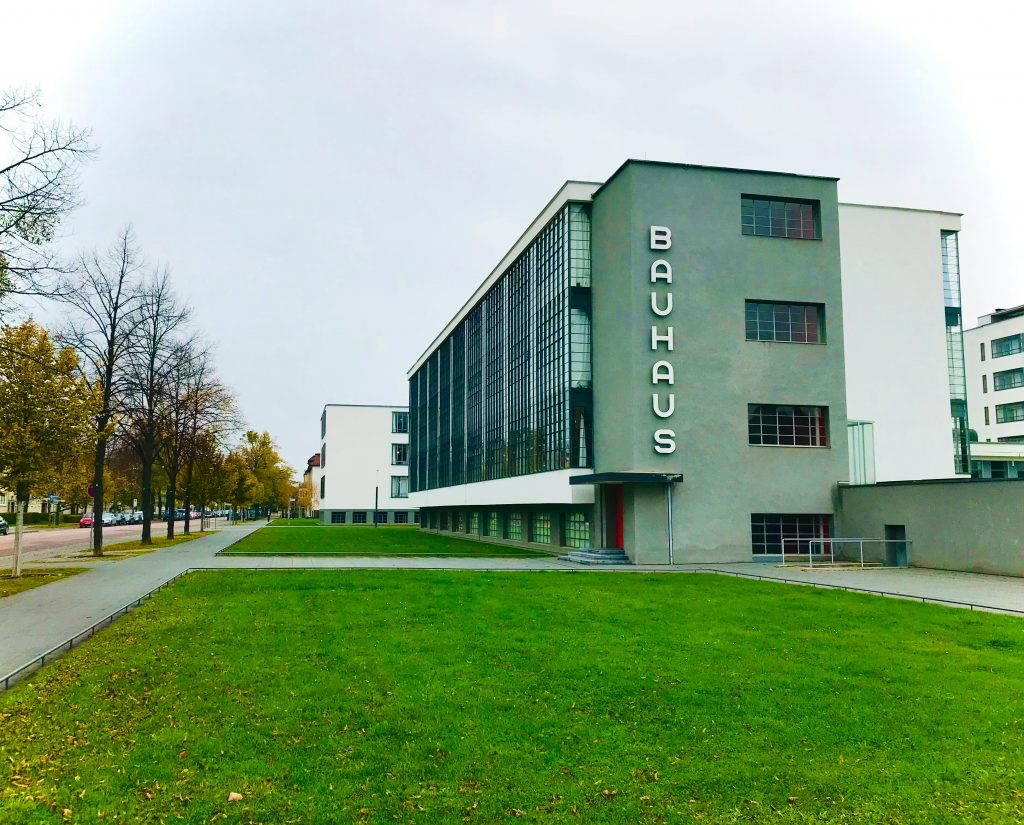
Mid-century modern design is often associated with walnut furniture, clean lines and warm interiors. Yet the movement did not emerge in isolation. Many of its core principles were shaped by earlier modernist ideas, particularly those developed at the Bauhaus in Germany.
Understanding the relationship between Bauhaus and Mid-Century Modern design helps explain why both movements continue to influence architecture, furniture and interior design today. While they share several principles, they also differ in tone, materials and overall atmosphere.
1. The Origins of Bauhaus Design
Bauhaus was founded in 1919 in Weimar, Germany by architect Walter Gropius. The school aimed to unite art, architecture and industrial production under a single design philosophy.
At its core, Bauhaus rejected ornamentation and historical revival styles. Instead, it embraced simplicity, geometry and functionality. Designers experimented with new materials such as steel tubing, glass and concrete, creating objects that were both practical and modern.
Furniture designers like Marcel Breuer introduced tubular steel chairs that reflected industrial manufacturing techniques. Architects such as Ludwig Mies van der Rohe further refined modernist architecture with clean structural lines and minimal decorative elements.
The Bauhaus movement laid the intellectual groundwork for much of 20th-century modern design.
2. What Defines Mid-Century Modern Design?
Mid-Century Modern design developed primarily between the late 1940s and the 1970s, particularly in the United States and Scandinavia. It emerged during a period of post-war optimism and rapid suburban development.
While Bauhaus focused heavily on industrial materials and strict geometric clarity, mid-century design introduced warmth and human comfort into modern interiors.
Key characteristics include:
- flat-panel cabinetry
- organic curves and sculptural furniture
- warm woods such as walnut and teak
- open-plan living spaces
- natural light and indoor–outdoor connections
Designers such as Charles and Ray Eames explored molded plywood furniture that balanced industrial production with comfort and craftsmanship.
Mid-century interiors therefore softened the starkness of earlier modernism.
3. Key Differences Between Bauhaus and Mid-Century Modern
Although Bauhaus influenced mid-century design, the two movements have distinct identities.
Bauhaus
Bauhaus design tends to feel more industrial and architectural. Furniture often uses materials like steel, glass and leather, and visual compositions emphasise strict geometry.
The colour palette is usually restrained, relying on black, white and primary colours.
Mid-Century Modern
Mid-century design is warmer and more residential. Natural materials play a central role, especially wood. Furniture pieces often feature tapered legs, curved forms and softer silhouettes. Read more about what defines MCM and understand what defined the era.
Colour palettes expand to include earthy tones such as mustard, olive green and burnt orange.
While Bauhaus celebrates structural purity, mid-century interiors aim for comfort and livability.
4. Shared Design Principles
Despite their differences, the two movements share several core ideas.
Both movements emphasise:
- functionality over decoration
- simple forms and clean lines
- modern materials
- efficient design for modern living
These principles reflect a broader modernist philosophy that shaped architecture and design throughout the twentieth century.
5. How Bauhaus Influenced Mid-Century Design
The connection between the two movements became stronger when Bauhaus designers emigrated to the United States during the 1930s. After the school closed in 1933, many of its architects and designers continued teaching and working abroad.
Modernist ideas spread through universities, architecture schools and design studios. These principles later influenced the development of mid-century modern architecture and furniture design.
The result was a design language that combined Bauhaus functionalism with warmer materials and a more domestic atmosphere.
6. Why Both Movements Still Matter Today
Bauhaus and Mid-Century Modern design remain influential because they prioritise clarity and functionality over trends.
Contemporary interiors continue to adopt:
- minimal forms
- honest materials
- efficient layouts
- balanced proportions
While Bauhaus represents the intellectual foundation of modern design, mid-century modern demonstrates how those ideas can be adapted for everyday living.
Understanding both movements helps explain why modern interiors continue to look forward while remaining connected to their design heritage.