Mid-century modern kitchens are not minimalist.
They are restrained.
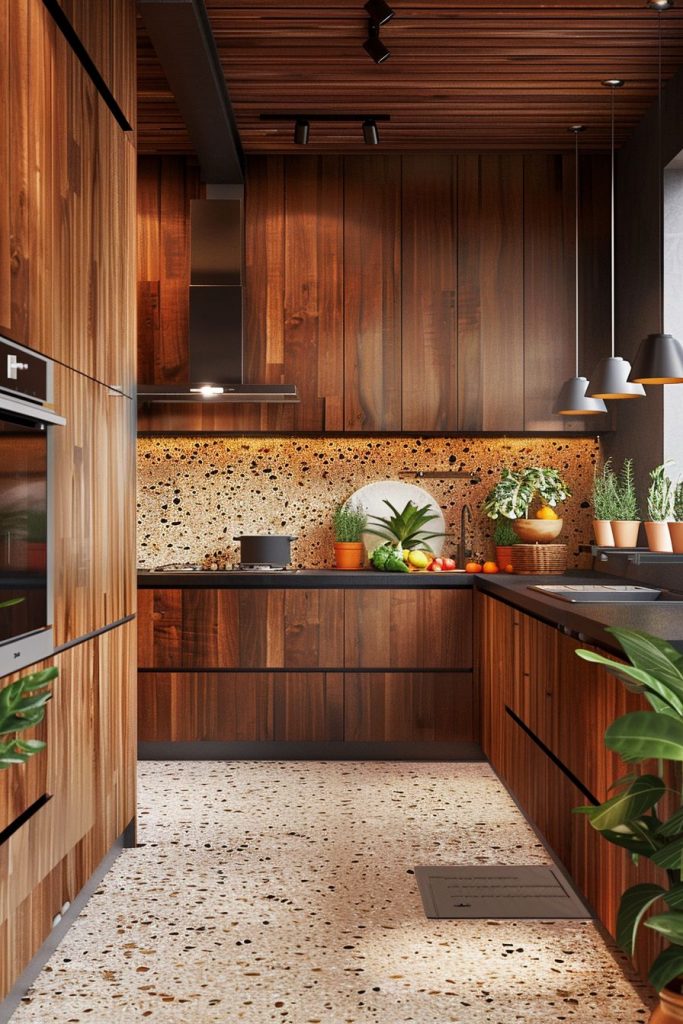
Defined by walnut cabinetry, sculptural lighting, vertical tile and warm colour palettes, MCM kitchens balance geometry with warmth. They feel intentional — never cold. Mid-century kitchens often used warm and nostalgic colours such as mustard, olive green and terracotta. You can explore these combinations further in our guide to mid-century modern colour palettes.
If you’re renovating a UK kitchen or simply updating cabinetry and finishes, here’s how to interpret the style properly.
Walnut Cabinetry as the Architectural Base
The clean lines and functional layouts of mid-century kitchens were strongly influenced by modernist design movements such as Bauhaus. You can explore this connection in our guide to Bauhaus vs mid-century modern design. The most consistent element across authentic mid-century kitchens is wood — particularly walnut and teak.
Many of these kitchen layouts were inspired by the open-plan philosophy that defined mid-century homes and architecture. Learn more in our article on why mid-century modern architecture still feels iconic.
Flat-front cabinet doors
Visible grain
Slim hardware or integrated pulls
Low visual bulk
Walnut works especially well in smaller kitchens because it introduces warmth without needing decorative clutter.
Buying Tip:
Look for flat slab doors rather than shaker profiles. Avoid heavy framing or ornate detailing.
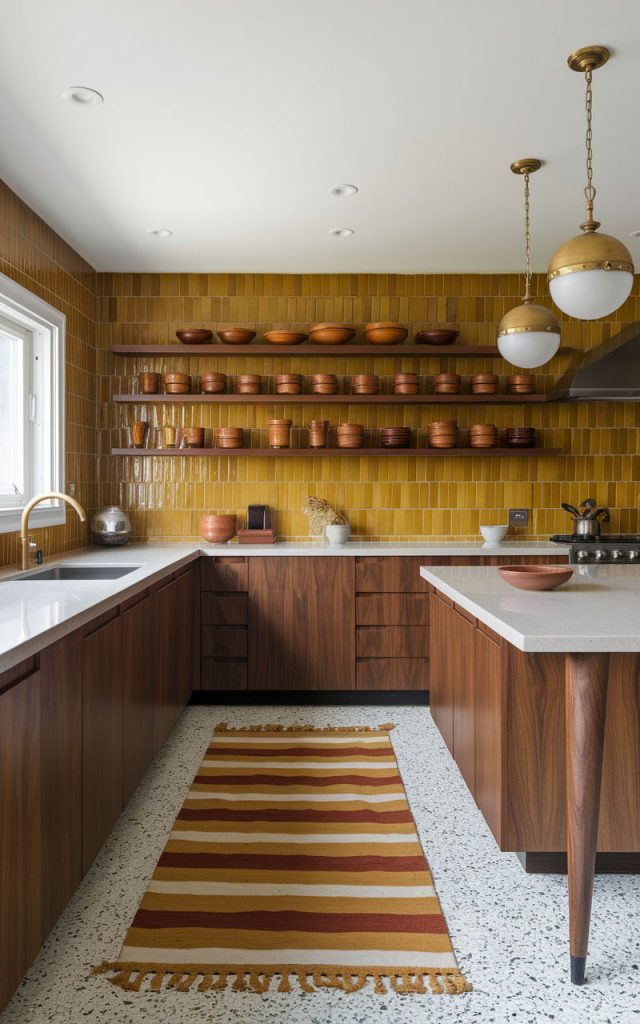
Vertical Tile: The Quiet Statement
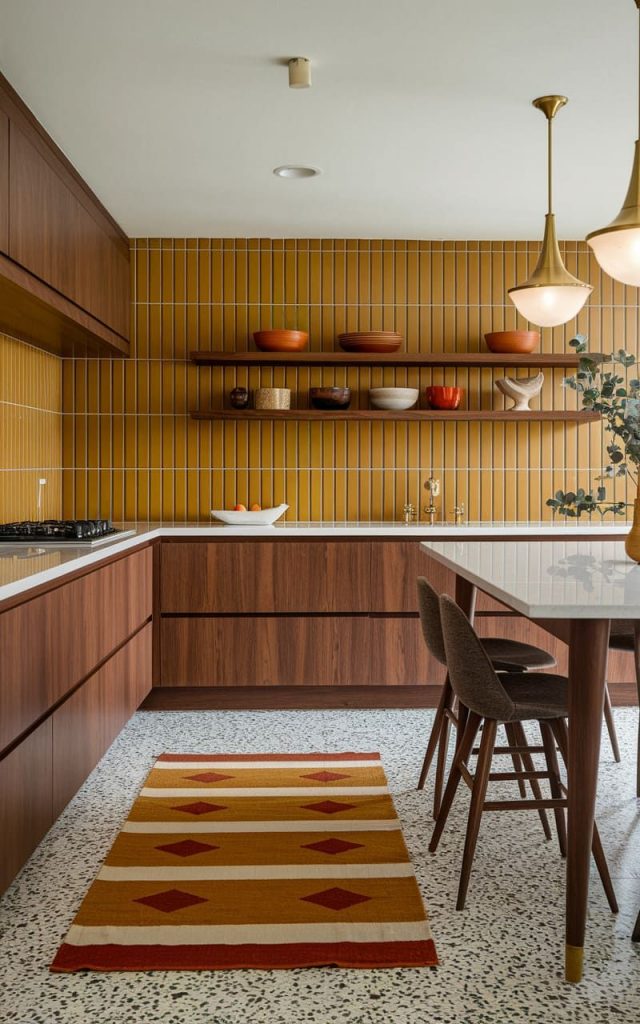
Notice how vertical stacked tiles instantly change the atmosphere of a kitchen.
Deep olive
Burnt orange
Mustard
Forest green
Vertical tile adds height and texture while staying geometric — a subtle nod to 1960s design language.
For smaller UK kitchens:
Choose narrow tiles in stacked formation to elongate walls vis
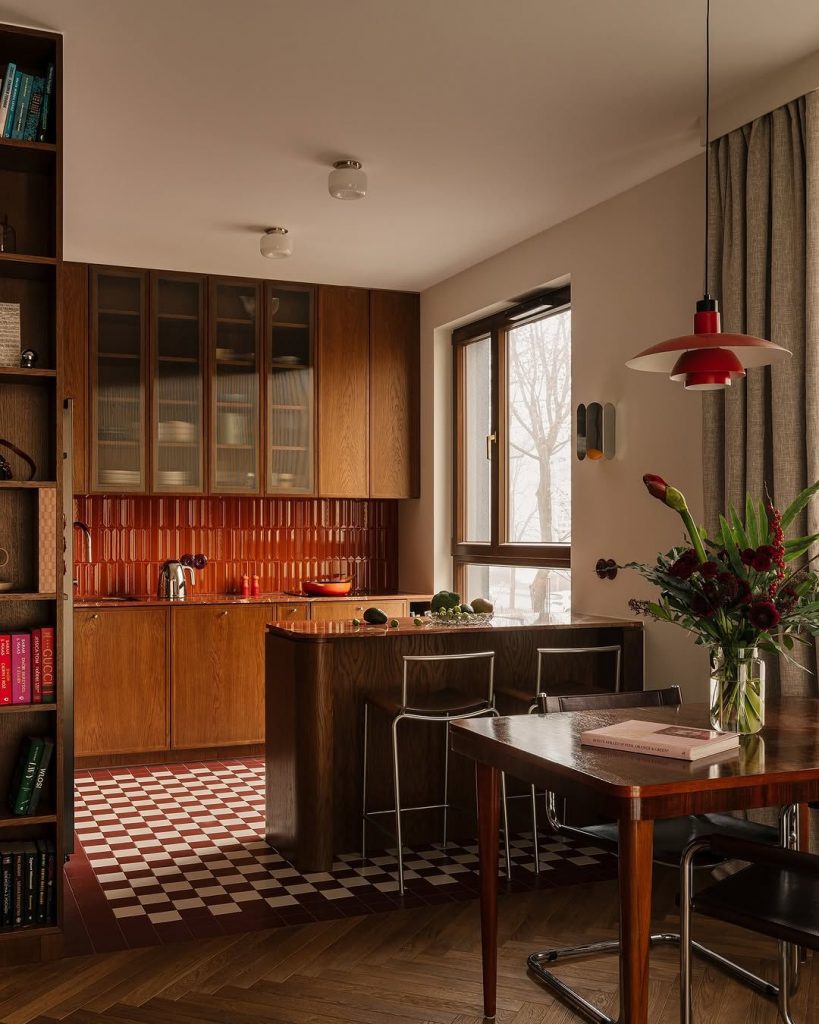
Terrazzo & Checkerboard Floors
Two strong mid-century flooring directions:
Terrazzo
Refined, timeless, speckled warmth. Works beautifully with walnut cabinetry and brass accents.
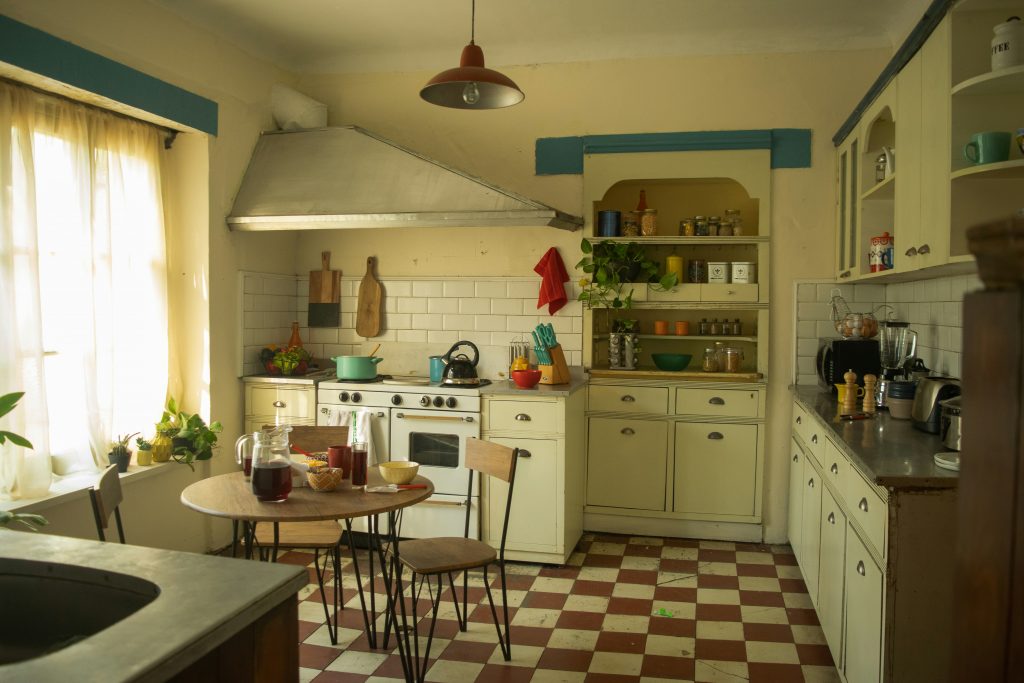
Checkerboard
Graphic and nostalgic. Best when cabinetry is clean and minimal to avoid visual overload.
If you want longevity, terrazzo is the safer investment.
Brass & Sculptural Lighting
Lighting in a mid-century kitchen should feel deliberate.
Look for:
- Globe pendants
- Slim brass hardware
- Track lighting with directional heads
- Minimal wall sconces
Avoid oversized industrial or matte-black warehouse styles — they disrupt th
Colour Pairings That Actually Work
Based on your reference palette:
Walnut + Olive
Walnut + Mustard
Walnut + Warm Cream
Walnut + Burnt Terracotta
Mid-century colour is earthy, not pastel.
Earthy tones like terracotta, chestnut and walnut were commonly used to complement natural wood cabinets. These tones are explored in our mid-century brown colour palette guide. If unsure, start with neutral walls and layer colour through tile or accessories.
Before You Renovate: Plan Proportions Properly
Mid-century kitchens rely on proportion.
Measure:
- Cabinet width
- Counter depth
- Clearance between island and wall
- Door swing space
Planning first prevents expensive mistakes.
Final Thoughts
A well-executed mid-century modern kitchen feels grounded and architectural. The warmth of walnut, the rhythm of vertical tile, and the geometry of terrazzo floors create a space that feels both nostalgic and current.
Focus on material integrity over trends. When proportion and tone are balanced, the result is timeless.