
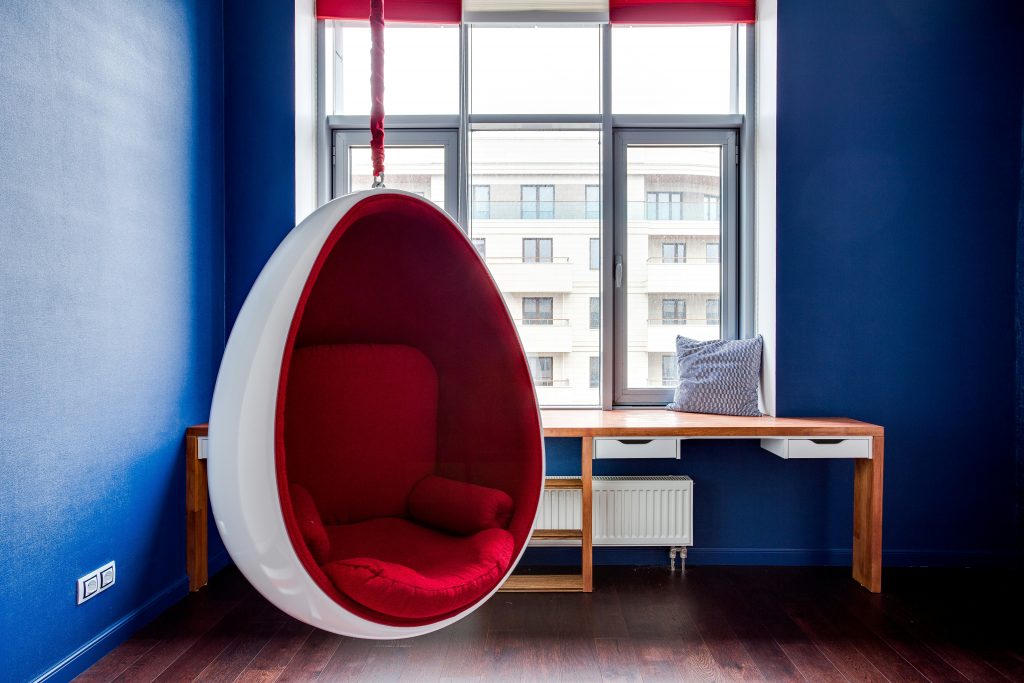
Few furniture pieces capture the spirit of modern design as powerfully as the Egg Chair. With its sculptural curves, cocoon-like comfort and unmistakable silhouette, the chair became one of the most recognisable icons of twentieth-century furniture design. More than just a striking piece of seating, it represents a moment when architecture, furniture and modern living converged into a single design philosophy.
The Egg Chair was designed in 1958 by the Danish architect and designer Arne Jacobsen for the historic SAS Royal Hotel in Copenhagen. It was originally created for the hotel’s lobby and lounge areas, where Jacobsen sought to design an interior environment that felt both modern and intimate.
The Designer Behind the Egg Chair
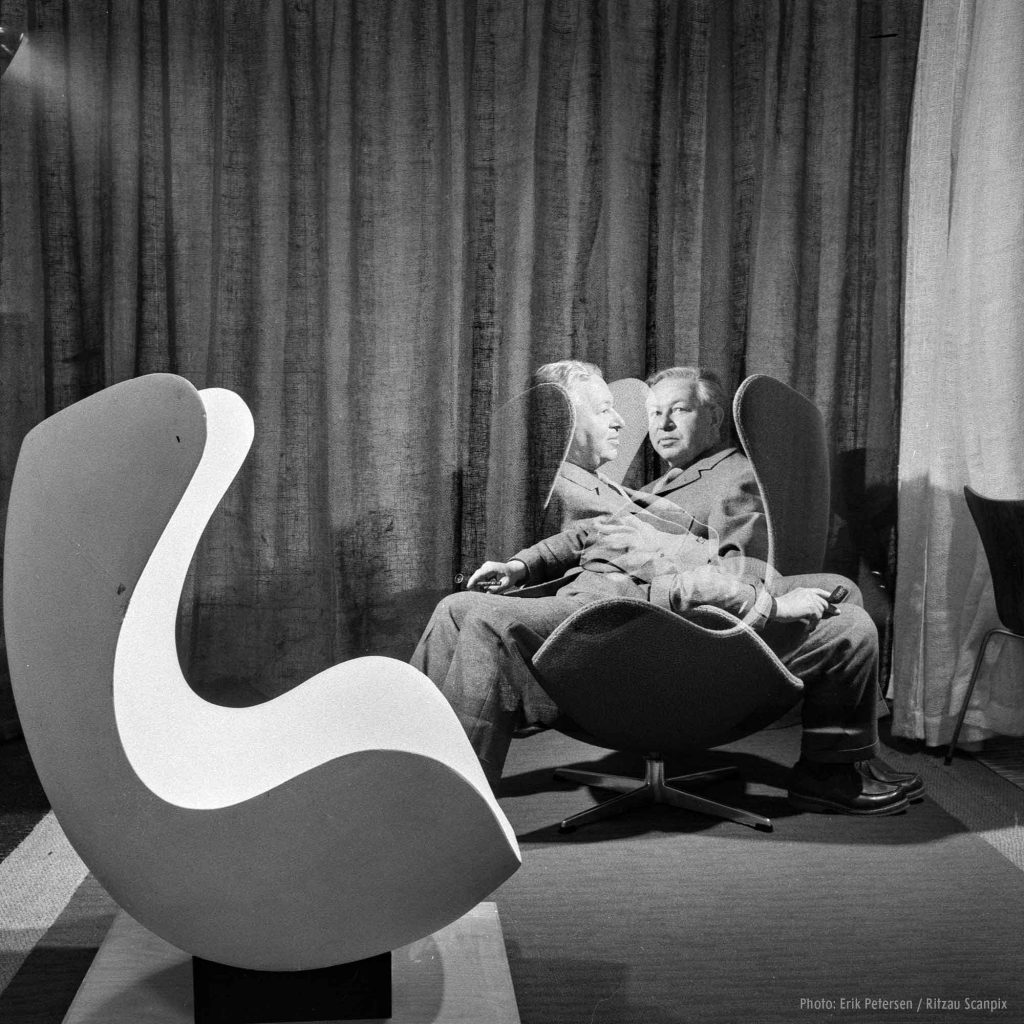
Arne Jacobsen was one of the most influential figures in Scandinavian modernism. Known for his ability to combine architecture, furniture and product design, he believed that every element of a space should work together harmoniously.
When designing the SAS Royal Hotel, Jacobsen approached the project holistically. He designed not only the building but also the interiors, lighting, textiles and furniture. The Egg Chair was part of this complete vision.
Jacobsen wanted a chair that could create a sense of privacy within the open hotel lobby. The result was a seat with high, curved sides that gently wrap around the sitter, forming a comfortable and visually striking shell.
A Sculptural Approach to Furniture
The Egg Chair was revolutionary because of its organic form. Unlike the angular furniture that dominated early modernism, Jacobsen explored soft curves and sculptural shapes.
The chair was constructed using a foam shell over a strong internal structure, allowing the sweeping shape to be produced without visible framing. This technique enabled designers to move beyond traditional furniture forms and experiment with new silhouettes.
The result was a chair that felt both futuristic and inviting — a perfect balance of function and artistic expression.
The Egg Chair also reflects the idea of material confidence in Mid-Century Modern design, where designers embraced innovative materials and construction techniques to create furniture that was both expressive and functional.
The Egg Chair in Mid-Century Modern Interiors
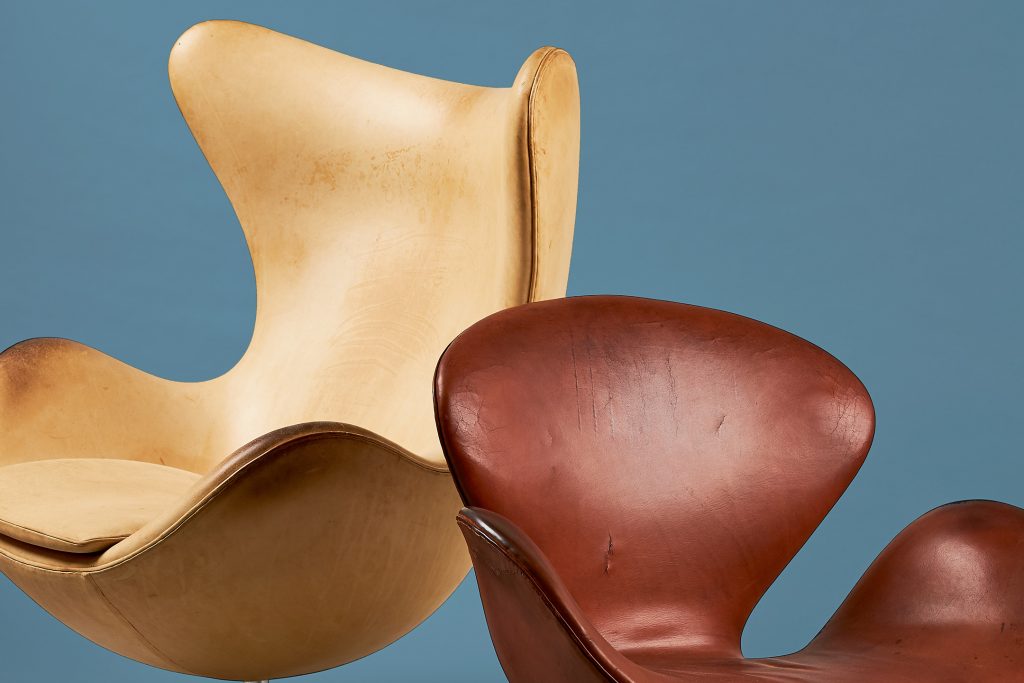
Although the Egg Chair is strongly associated with Scandinavian design, it quickly became a defining piece within Mid-Century Modern interiors.
Its bold shape contrasts beautifully with the clean lines and warm wood tones typical of Mid-Century spaces. The chair often appears alongside walnut furniture, glass tables and brass lighting, creating a dynamic balance between structure and sculpture.
In many interiors, the Egg Chair functions almost like a piece of art. Even when placed in a minimalist room, its silhouette draws attention without overwhelming the space.
A Symbol of Modern Design
Since its introduction in the late 1950s, the Egg Chair has remained in continuous production. Its enduring popularity reflects the success of Jacobsen’s design philosophy.
The chair represents several key principles of modern design:
- Human-centred comfort
- Sculptural simplicity
- Innovative materials
- Timeless aesthetics
Because of these qualities, the Egg Chair quickly became a symbol of sophisticated modern interiors.
Pieces like the Egg Chair help illustrate what defines https://thewalnuttheory.com/what-defines-mid-century-modern-design/Mid-Century Modern design, where simplicity, human comfort and sculptural forms became central to modern interiors.
The Egg Chair’s Influence on Contemporary Furniture
Today, the Egg Chair continues to inspire designers around the world. Its influence can be seen in contemporary lounge chairs that emphasise enveloping forms, ergonomic comfort and expressive silhouettes.
Many modern furniture designers explore similar ideas: seating that creates a sense of personal space while remaining visually light within the room.
The chair also helped shift the perception of furniture from purely functional objects to design statements capable of defining the character of an interior.
Why the Egg Chair Still Feels Modern Today
More than sixty years after its creation, the Egg Chair remains relevant in contemporary interiors.
Its timeless appeal comes from the careful balance between innovation and simplicity. The design is bold enough to stand out, yet restrained enough to fit comfortably into a wide variety of spaces.
Whether placed in a modern living room, a design studio or a boutique hotel, the Egg Chair continues to embody the optimism and creativity of Mid-Century design.