
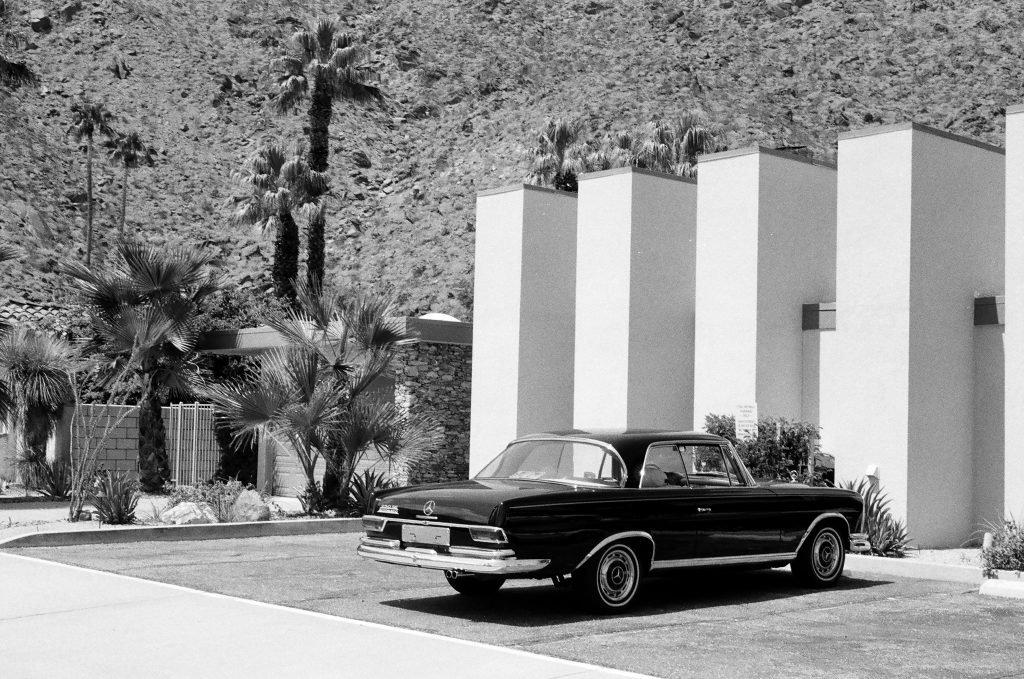
There is something cinematic about mid-century modern architecture.
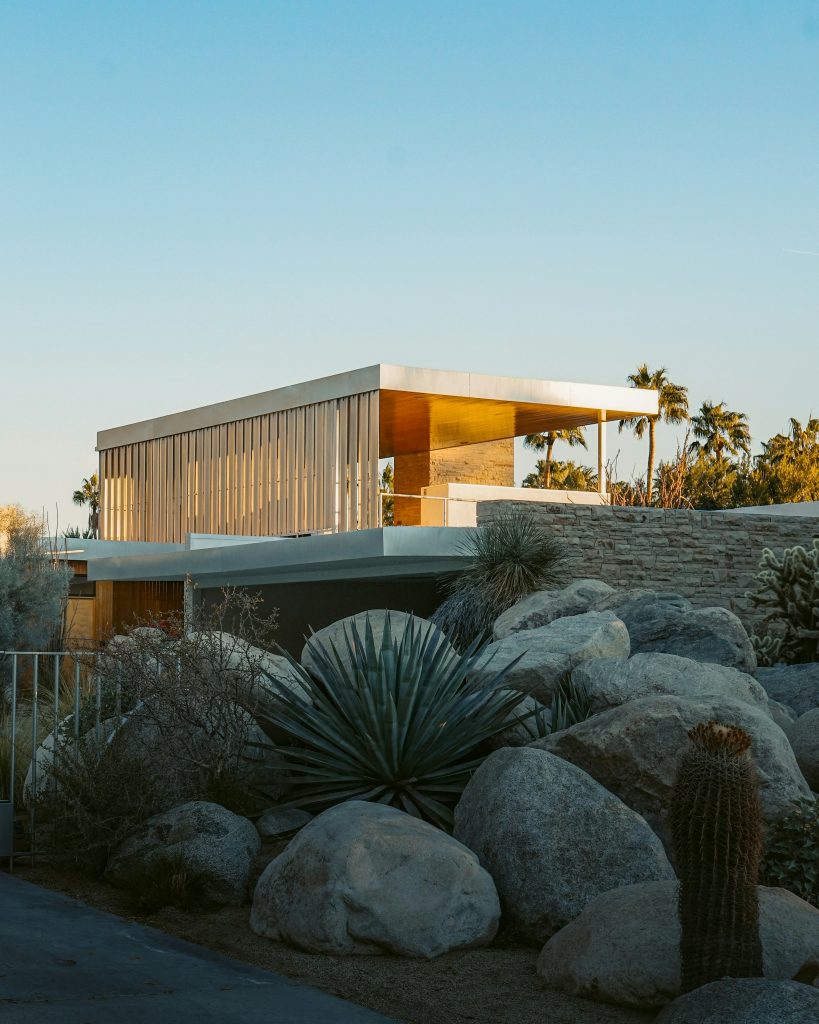
A white roofline cutting sharply against a blue sky.
A glass wall dissolving the boundary between indoors and desert landscape.
A pastel hotel facade glowing under neon at dusk.
These buildings are not simply old.
They are timeless.
The photographs you see — desert homes framed by palms, neon motel signage, low-slung roofs hovering above glass walls — feel iconic because they represent a moment when architecture aligned perfectly with optimism, technology, and lifestyle. The Post-War Vision: Architecture for a New Era
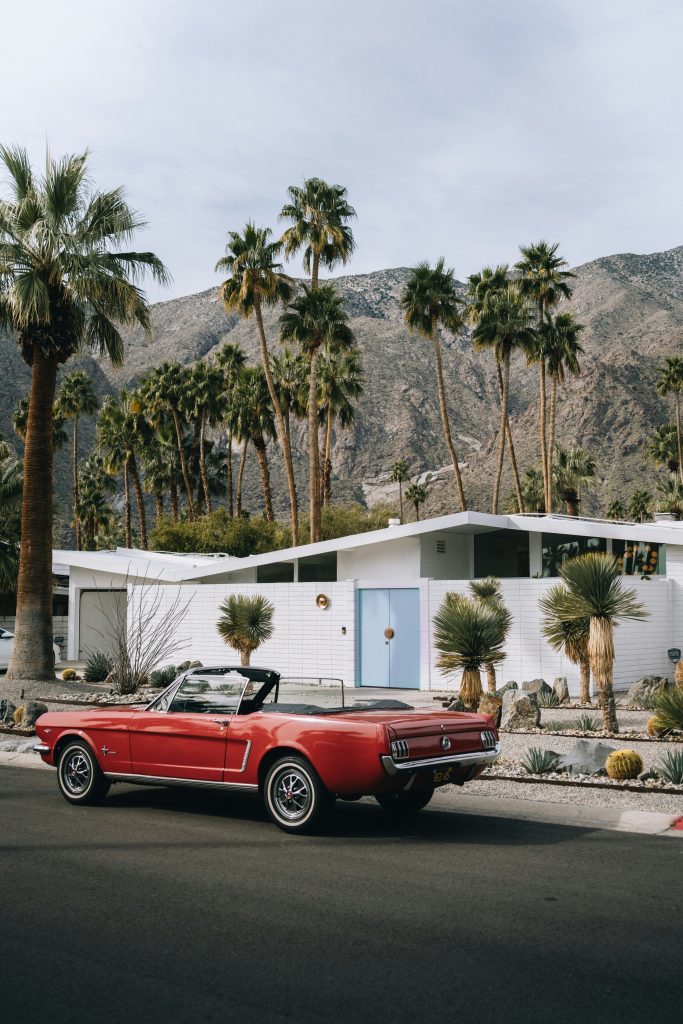
Mid-century modern architecture emerged between the 1940s and 1970s, shaped by post-war innovation and a belief in progress.
Architects like Richard Neutra, Albert Frey, and Donald Wexler weren’t designing decorative homes.
They were designing for modern living.
Their principles were clear:
- Flat or gently sloped rooflines
- Open-plan interiors
- Floor-to-ceiling glass
- Honest materials like concrete, stone, and walnut
- Seamless indoor-outdoor transitions
The goal was functional beauty — not ornament.
When you look at these images, you’re seeing that philosophy in action. Why The Desert Became the Perfect Canvas
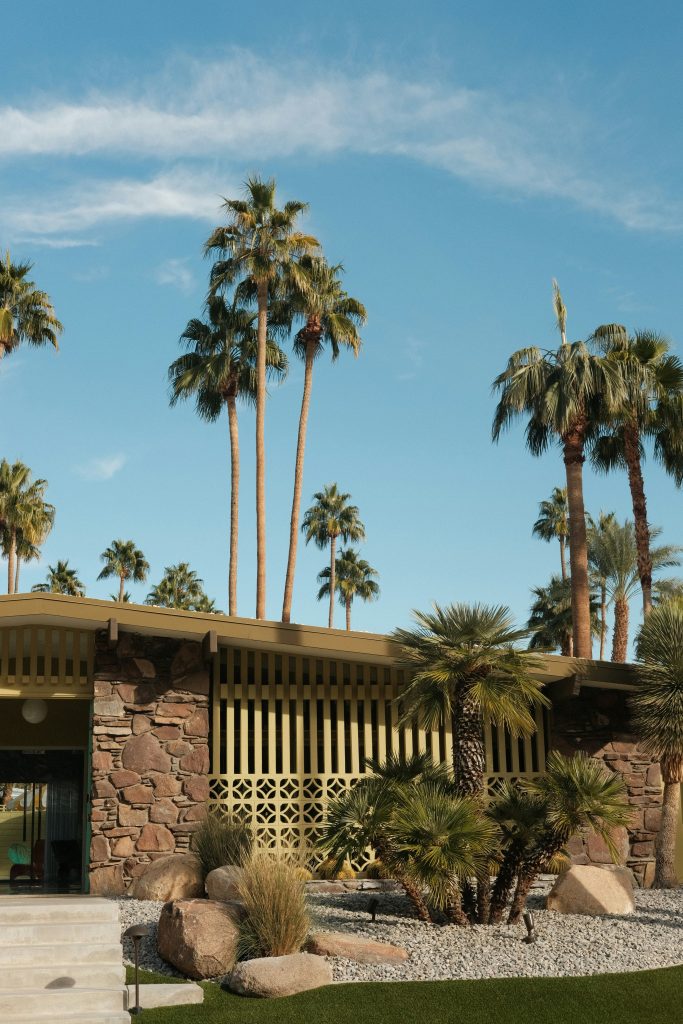
Palm Springs became a laboratory for mid-century experimentation.
Architects like William Krisel and Albert Frey used the desert landscape as part of the composition.
Low horizontal lines mirrored the horizon.
Deep overhangs controlled sunlight.
Glass walls framed mountain backdrops like living artwork.
The homes feel iconic because they are site-responsive.
They belong exactly where they stand.
The Power of the Roofline
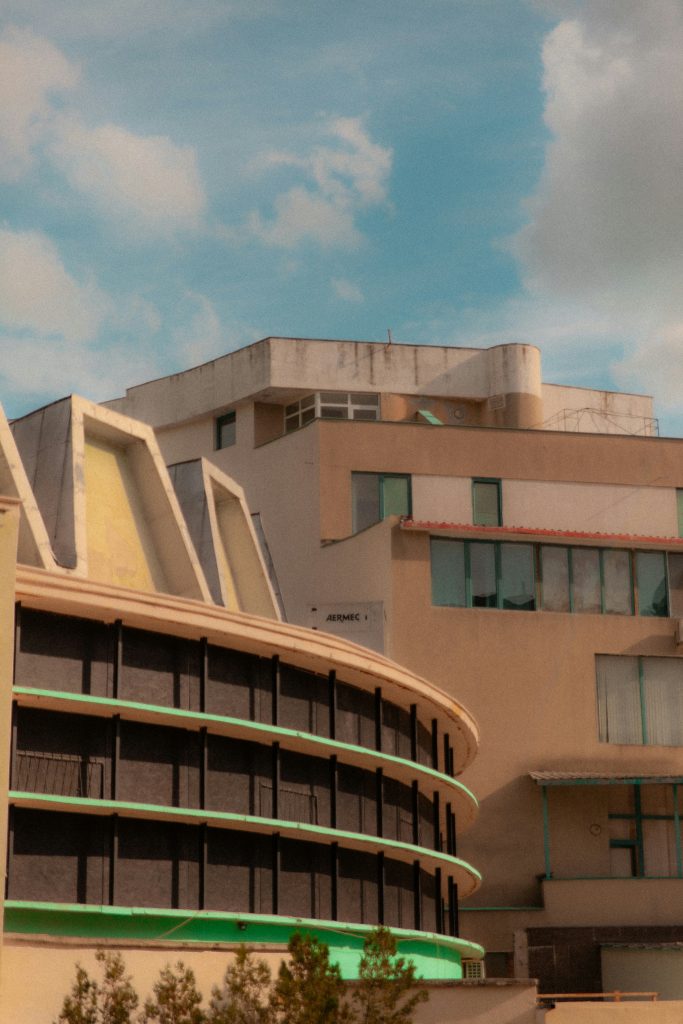
One of the most recognisable features in your images is the dramatic roof profile.
Sharp angles. Floating planes. Deep cantilevers.
Architects such as John Lautner pushed this even further — turning roofs into sculptural statements that appear to defy gravity.
That tension between lightness and structure is what makes these buildings photograph so beautifully.
The geometry is bold — but restrained. Neon, Motels & Optimism
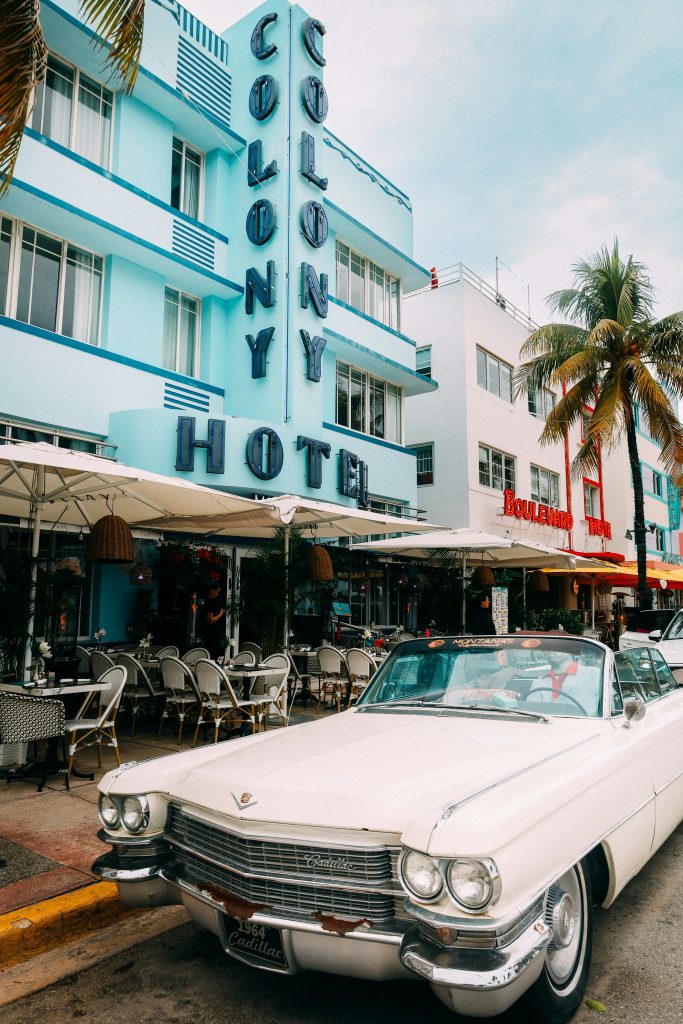
The pastel hotels and neon signage reflect another side of mid-century modernism: commercial optimism.
After World War II, travel culture expanded. Road trips became aspirational. Motels and roadside architecture embraced streamlined forms, playful colour, and illuminated typography.
Many mid-century homes also embraced bold interior colours that complemented natural materials and wood tones. These combinations are explored in our guide to mid-century modern colour palettes.
And while many people associate mid-century modern design with warm earth tones like burnt orange, mustard and walnut brown, earlier mid-century interiors often featured a softer palette of pastel colours. These gentle tones were particularly popular during the 1950s and helped create interiors that felt optimistic, modern and light.
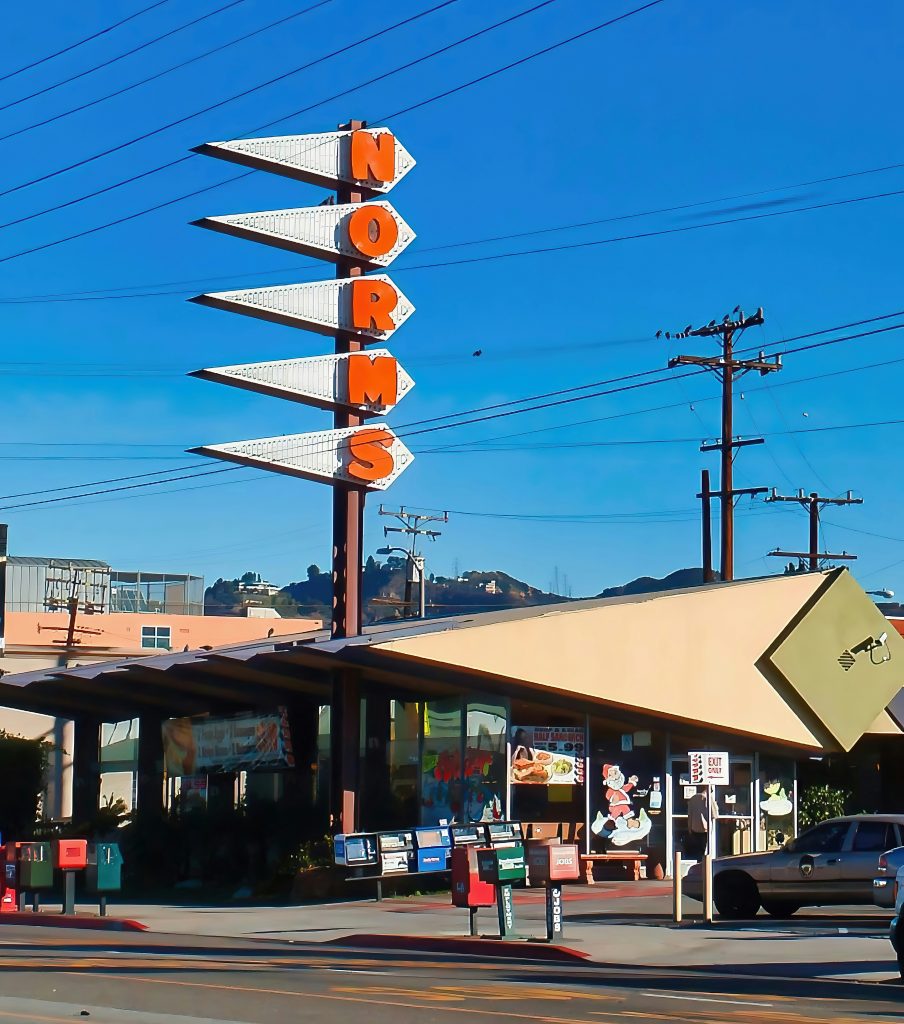
These buildings feel iconic because they represent confidence.
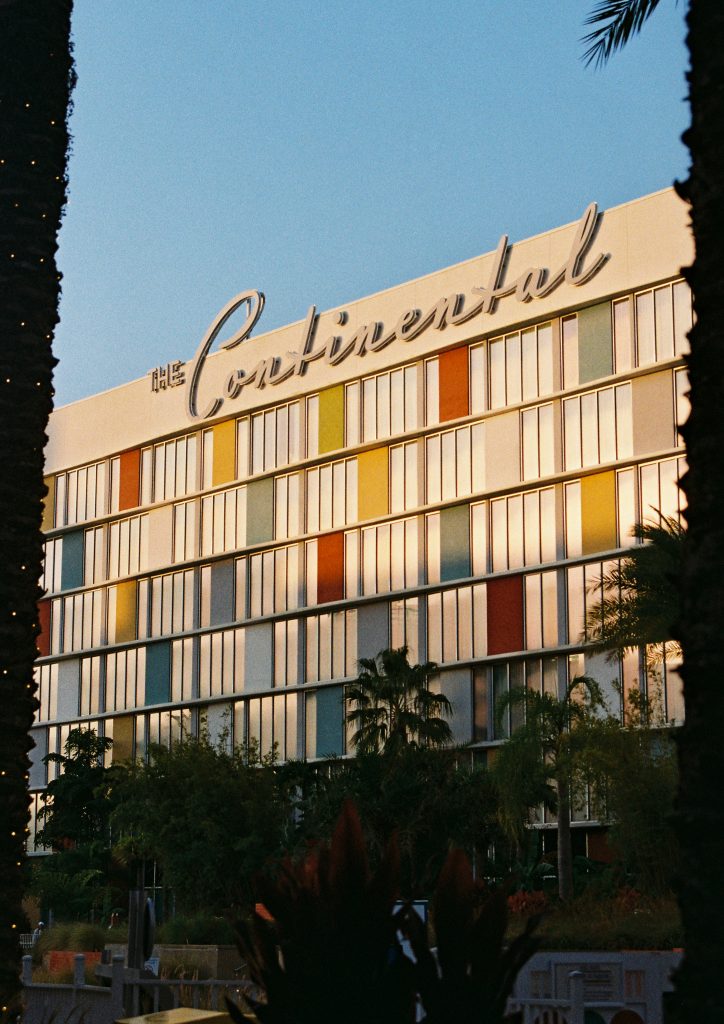
They were forward-looking.
They believed in tomorrow.
Why These Images Still Captivate Us
There are three reasons mid-century architecture photographs so powerfully today:
1. Clarity of Line
No clutter. No excessive detailing. Strong geometry.
2. Harmony With Nature
Palm trees, desert plants, mountains — the architecture never competes with the landscape.
3. Material Warmth
Concrete and glass are balanced with wood, especially walnut, creating warmth within modernism.
That balance is rare.
And it’s what makes the aesthetic endure.
Architecture as Lifestyle
Mid-century modern wasn’t just about buildings.
It was about how people wanted to live.
Open-plan spaces encouraged gathering.
Glass walls invited light.
Low profiles grounded the home to the earth.
When we look at these photographs, we’re not just admiring architecture.
We’re responding to a lifestyle promise.
Light. Air. Flow. Simplicity.
The Enduring Influence
Today’s “modern” homes often borrow mid-century elements:
- Flat roofs
- Minimal detailing
- Indoor-outdoor spaces
- Neutral palettes
But the originals remain unmatched because they were not retro.
They were revolutionary.
That authenticity is what gives these images their power.
Final Reflection
Mid-century modern architecture feels iconic because it was never chasing a trend.
It was rooted in proportion, material honesty, and human-centred design.
And that is precisely why it continues to inspire interiors — including the walnut-toned, warm, grounded spaces we explore here at The Walnut Theory.
The architecture came first.
The styling followed.